
Firi Weekly: No Clarity Act, Yet

Firi Weekly: No Clarity Act, Yet

  • Clarity Act Vote Delayed Until September:
    • The U.S. Senate entered its five-week recess last week without voting on the Clarity Act, which aims to establish clearer rules for the crypto industry. A Senate vote is now scheduled for September 15, but disagreements involving the crypto industry, traditional financial institutions and political parties, along with unresolved issues such as an ethics package, remain significant hurdles to passage.
  • Exchange Balances Diverge as Ethereum Staking Climbs:
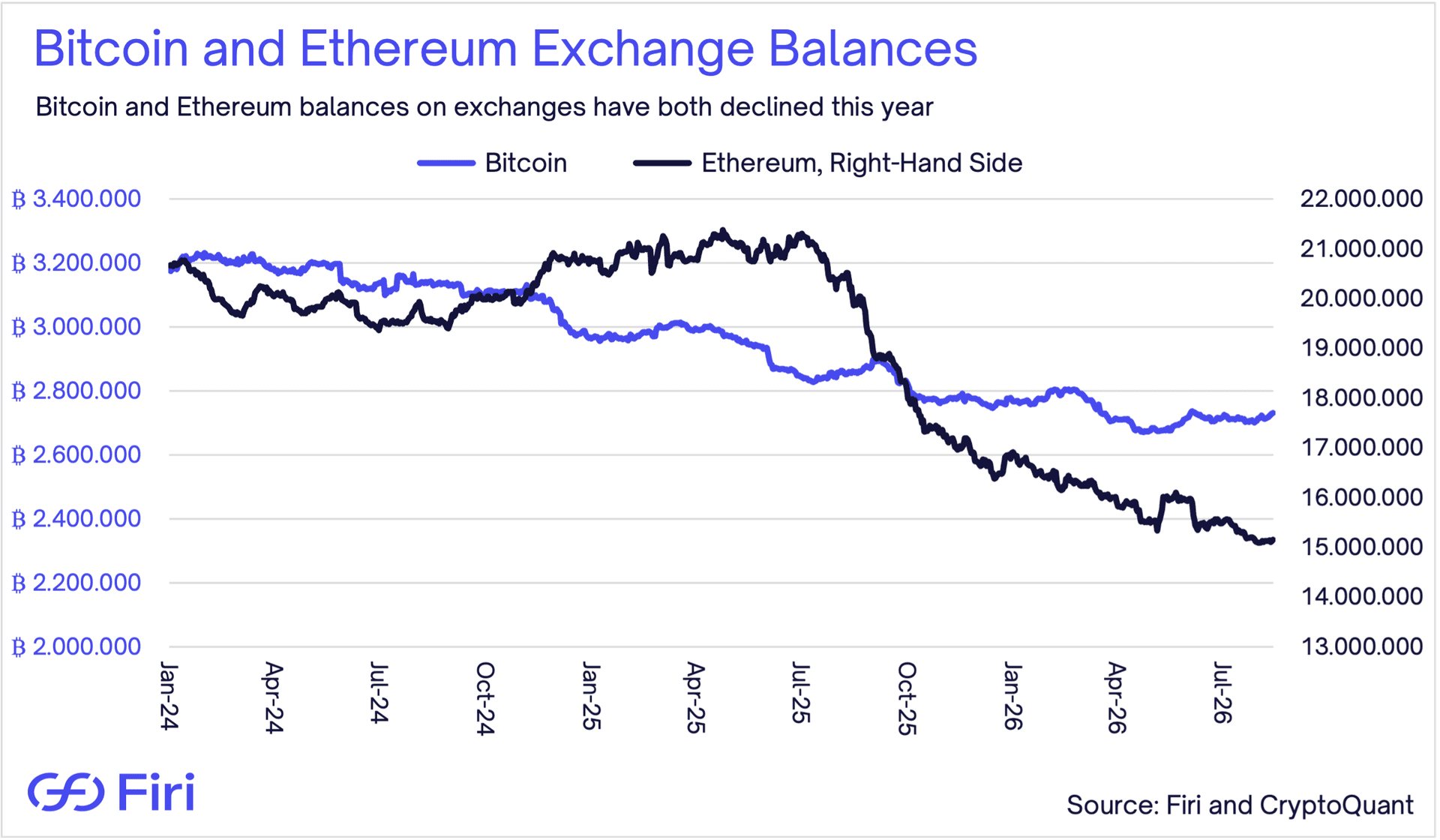
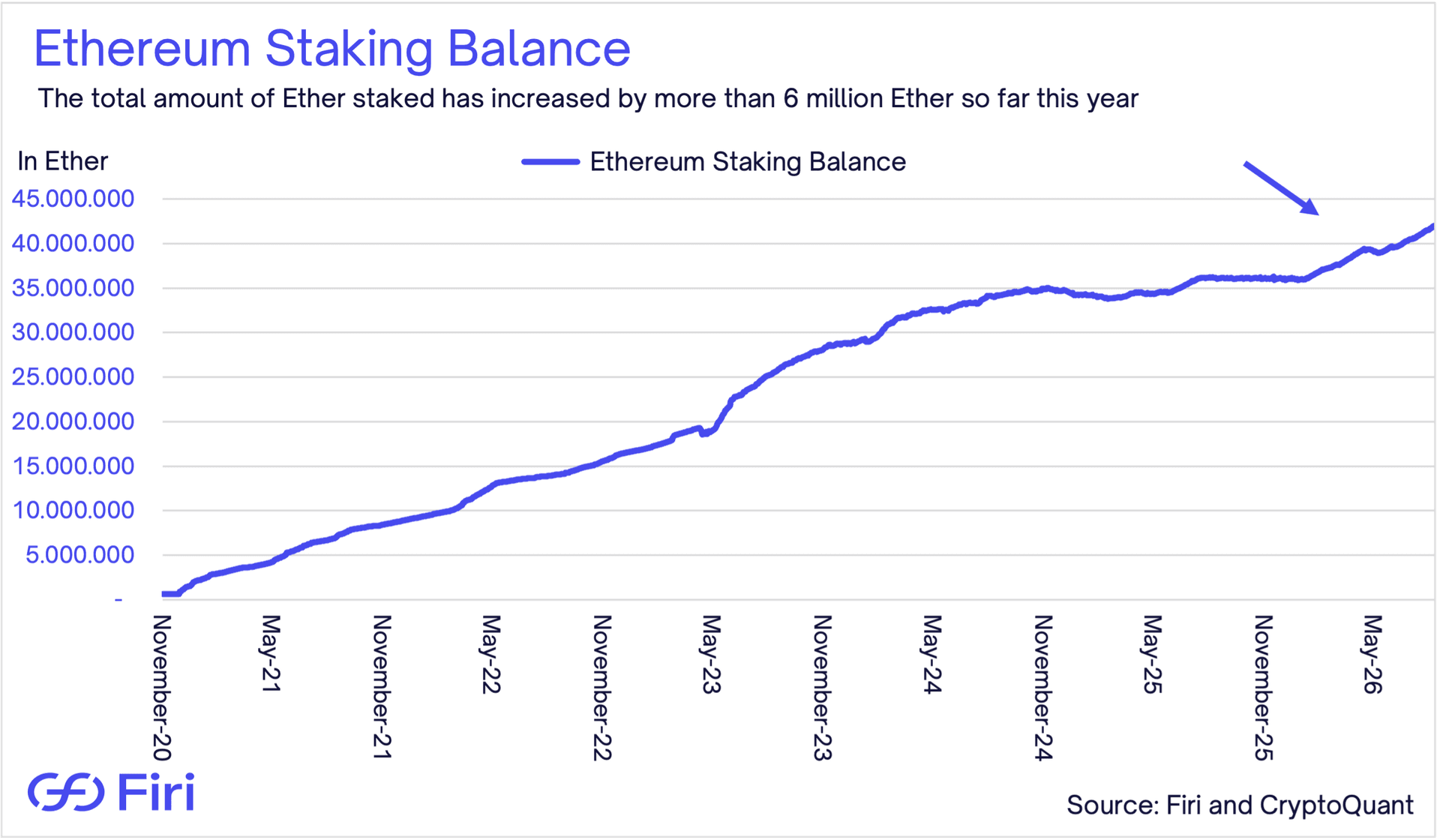
    • Bitcoin held on exchanges has risen by 55,000 bitcoins, worth about $3.52 billion, since April, although balances remain down year-to-date. Ethereum exchange balances have consistently declined throughout the year, including since April, falling by roughly 1.75 million Ether year-to-date. Meanwhile, staked Ether has increased by over 6 million to 42 million Ether, representing approximately 34.4% of total supply.
  • Cloudflare Launches Stablecoin Wallet for AI Agents:
    • Cloudflare launched Cloudflare Wallets, a crypto wallet designed specifically for autonomous AI agents to store, send and receive stablecoins when purchasing or selling products or services from humans or other agents. The move is notable because a major non-crypto company is building dedicated payment infrastructure around stablecoins.
  • U.S. July Jobs Report Shows 23,000 Losses:
    • The U.S. economy lost 23,000 jobs in July, compared with market expectations for an 83,000-job gain. The weakness could increase pressure on the Federal Reserve to cut interest rates, potentially benefiting crypto markets, but it also signals that underlying U.S. economic conditions may be deteriorating.
Last Week’s Big Three

The Senate Delays Clarity Act Vote Until September: The U.S. Senate began its five-week recess last week without voting on the Clarity Act. The bill is intended to provide clearer rules for the U.S. crypto industry. Among other things, it could strengthen customer protections, improve conditions for crypto companies and make it easier for traditional financial institutions to engage more deeply with digital assets. It is therefore widely seen as a potentially positive development for the industry.

Throughout 2026, there have been significant disagreements over what the bill should include and how it should be structured. The main parties involved include the crypto industry, the traditional financial sector, the White House, Republicans and Democrats. This has led to considerable back and forth over the legislation and ultimately prevented the Senate from voting on it before lawmakers went into recess last week.

That being said, the positive development is that the CLARITY Act is now scheduled for a Senate vote on September 15, shortly after senators return from recess. Even so, several obstacles remain. These include an ethics package intended to regulate how politicians and public officials may participate privately in the crypto market. Whether the bill will pass in September therefore remains uncertain.

Cloudflare Launches Wallet for AI Agents: Cloudflare, the large U.S. internet infrastructure company, announced last week that it is launching a crypto wallet called Cloudflare Wallets. The wallet has been designed specifically to allow AI agents to transact using stablecoins. AI agents are artificial intelligence systems capable of performing tasks autonomously. Using stablecoins and Cloudflare Wallets, these agents can store, send and receive stablecoins as payment for physical products or services when transacting with humans or other AI agents.

The development is notable because Cloudflare is not a crypto company. Its decision to build a dedicated solution suggests that it sees meaningful potential in AI agents using stablecoins for payments.

BNY Launches Staking for Institutional Clients: BNY, previously known as The Bank of New York Mellon, launched staking for institutional clients last week. The staking service will be provided by crypto financial services company Galaxy and will allow BNY's existing crypto custody clients to stake eligible crypto assets. BNY oversees more than $62 trillion in assets across asset classes, making it one of the world’s largest banks.

The staking offering follows BNY's launch of crypto custody services in 2022. The bank also has plans related to asset tokenization, where traditional assets such as equities, commodities and debt are issued on public blockchains. Once these instruments are issued on blockchains such as Ethereum or Solana, they can be traded and used across a broader ecosystem of decentralized applications.

Behind the Charts

Chart 1: Bitcoin and Ethereum Exchange Balances

Firi illustration

Bitcoin's exchange balance has increased over the past few months after reaching its lowest level in April this year since around October 2019. Since April, the amount of Bitcoin held on exchanges has risen by 55,000 BTC, worth about $3.52 billion. Even after this increase, Bitcoin exchange balances remain lower year-to-date.

Lower exchange balances are generally viewed as positive, while higher balances can be viewed as negative. The reasoning is that when fewer bitcoins are held on exchanges, fewer are immediately available to be sold at short notice. Bitcoin held away from exchanges is more likely to be held for the longer term.

Ethereum exchange balances, meanwhile, have continued to decline throughout the year. The total amount of Ether held on exchanges is down by about 1.75 million Ether this year, worth approximately $3.33 billion.

Chart 2: Ethereum Staking Balance

Firi illustration

Some of the Ether leaving exchanges may have moved into staking, as the total amount of staked Ether has continued to increase. So far this year, the amount of staked Ether has risen by slightly more than 6 million to a total of 42 million Ether, representing approximately 34.4% of Ethereum's total supply.

This can also be interpreted as a sign that Ether is increasingly being held with a longer-term horizon, since holders who stake their Ether cannot necessarily unstake it from one day to the next in order to sell.

A Number to Remember

23,000 Jobs

The U.S. jobs report for July was released last week and showed an unexpected loss of 23,000 jobs. The market had expected employment to increase by 83,000.

For crypto, the report has both positive and negative implications. On the positive side, weaker employment data could make the U.S. Federal Reserve, the country's central bank, more inclined to lower interest rates. On the other hand, the figures underline that the U.S. economy may not be as strong as it has appeared recently.

On Our Radar

On our radar for the week ahead:

  • Will the SEC Set the Rules Now? The U.S. Securities and Exchange Commission (SEC) will reportedly publish guidelines this week covering several areas of the crypto market, including tokenization. If the Clarity Act does not pass in September, this kind of regulatory guidance may become more common in the years ahead. For the crypto industry, it is at least positive that the SEC is currently considerably more crypto-friendly than it has been historically.
  • Will the Clarity Act Move Forward During the Recess? Several issues still need to be resolved for the Clarity Act to pass the Senate in September. If progress is made, much of the negotiation is likely to happen during the Senate recess. We are therefore watching for news in the coming weeks that could indicate the different parties are moving closer to agreement on the outstanding issues.
  • Will Stablecoin Supply Keep Falling? Over the past few months, the total stablecoin supply has declined by approximately $15 billion. This points to lower activity in the crypto market, while crypto prices have largely remained at the same low levels. We are watching to see whether the stablecoin supply continues to fall or begins to recover, as a reversal could indicate that activity is starting to return to the crypto market.
Portrait of Mads Eberhardt, Cryptocurrency Analyst at Firi.

Mads Eberhardt

Written 13/08/2026

Should not be considered financial advice. Crypto may involve high risk.