Firi Weekly: War in the Middle East

Firi Weekly: War in the Middle East

  • U.S. and Israel Strike Iran:
    • Coordinated U.S.–Israel airstrikes targeted Iran’s nuclear and military sites on Saturday, followed by Iran retaliating across the region. This escalated into a broader conflict and increased global market uncertainty, strengthening the dollar and raising expectations of fewer U.S. rate cuts this year.
  • Bloomberg Brings Financial Data Onchain:
    • Bloomberg and Kaiko will publish digital-asset market data directly on the Canton Network, supporting tokenized assets like U.S. Treasuries, equities, and commodities.
  • AI Could Accelerate Ethereum Development:
    • Vitalik Buterin said artificial intelligence can significantly speed up Ethereum’s roadmap development while also improving code security.
  • Strong Inflows Into Crypto ETFs:
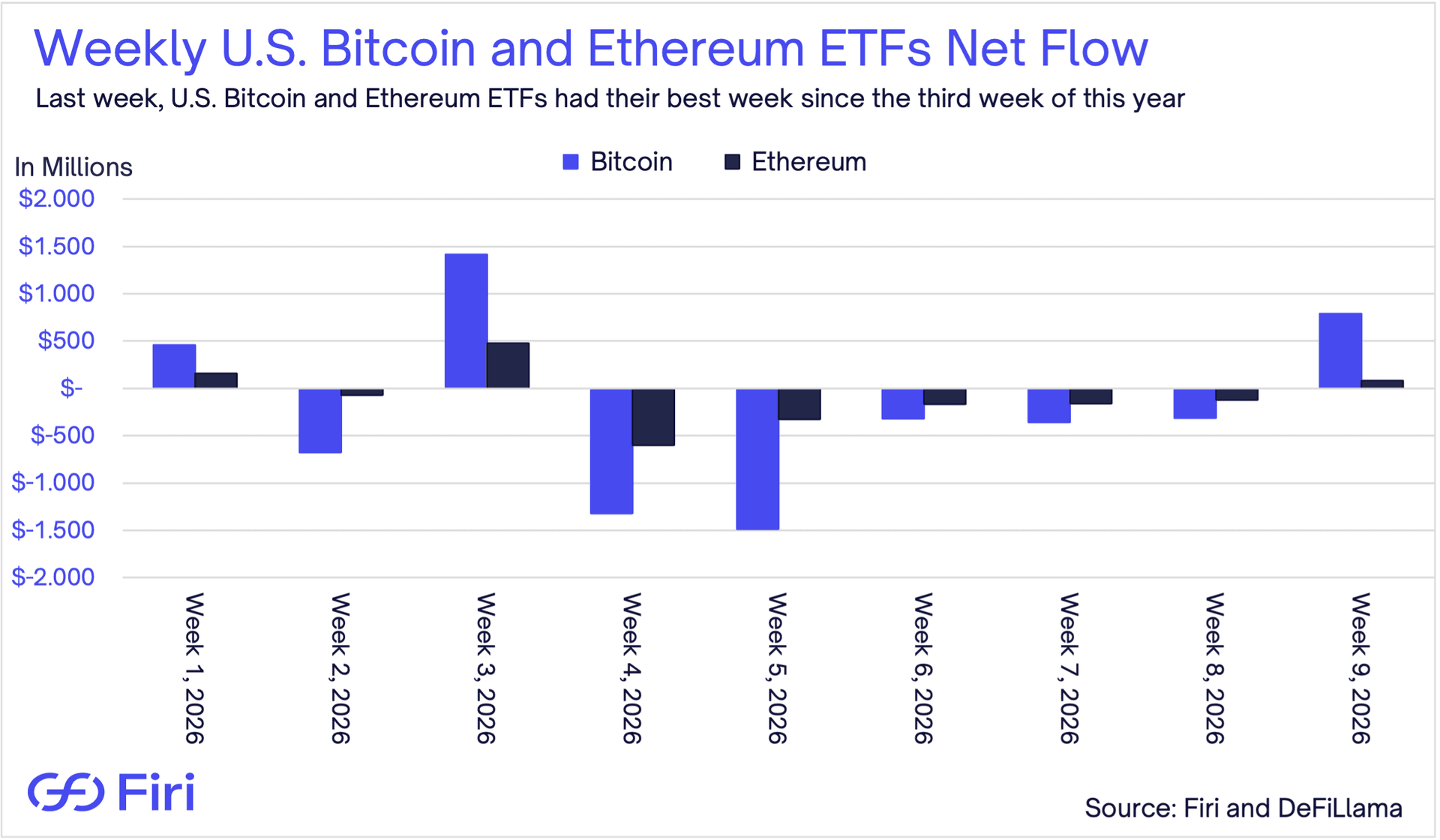
    • The U.S. Bitcoin ETFs saw $787.4 million in net inflows last week, and the U.S. Ethereum ETFs saw $80.5 million—together the strongest week since the third week of 2026—suggesting investors were turning more optimistic again before the Middle East conflict started.

Last Week’s Big Three

Vitalik Buterin Says AI Can Speed Up Ethereum’s Roadmap: Vitalik Buterin, co-creator of Ethereum, said on Saturday on the social media platform X that artificial intelligence could help accelerate the development of Ethereum’s roadmap. According to Buterin, AI is dramatically speeding up coding and could also improve the security of the code used by the Ethereum network.

This highlights how AI may benefit the crypto sector more broadly. Faster development cycles could accelerate improvements to cryptocurrencies and blockchain infrastructure, which are typically complex and time-consuming to build.

The U.S. and Israel Strike Iran: Early Saturday, the United States and Israel launched coordinated airstrikes on key Iranian military, nuclear, and leadership targets across Iran. The strikes reportedly aimed to neutralize Iran’s nuclear program and ballistic missile capabilities after months of failed negotiations between the U.S. and Iran.

Reports later indicated that Iran’s Supreme Leader, Ali Khamenei, was killed in one of the strikes. Iran responded with retaliatory attacks against Israel, U.S. bases in nearby Arab countries, and targets within those countries.

The situation has since escalated into an active conflict. There are indications that it could persist for some time, although some contact between the parties has reportedly taken place in an effort to end the fighting. Overall, this development is negative for both crypto and broader financial markets, as discussed later.

Bloomberg to Publish Financial Data Onchain: Bloomberg, the global financial data, analytics, and media company, announced last week that it will work with digital-asset market data provider Kaiko to make Bloomberg’s digital-asset market data available directly on public blockchains. The service will initially launch on the Canton Network.

Bloomberg says institutional clients increasingly expect the same trusted data they rely on in traditional financial markets to also be accessible onchain. Over time, the data will likely primarily support tokenized assets such as U.S. Treasuries, equities, and commodities.

Tokenized assets are financial instruments issued directly on public blockchains, such as Ethereum. They can be traded around the clock and integrated into decentralized applications. For these assets, having reliable data is particularly important.

Behind the Charts

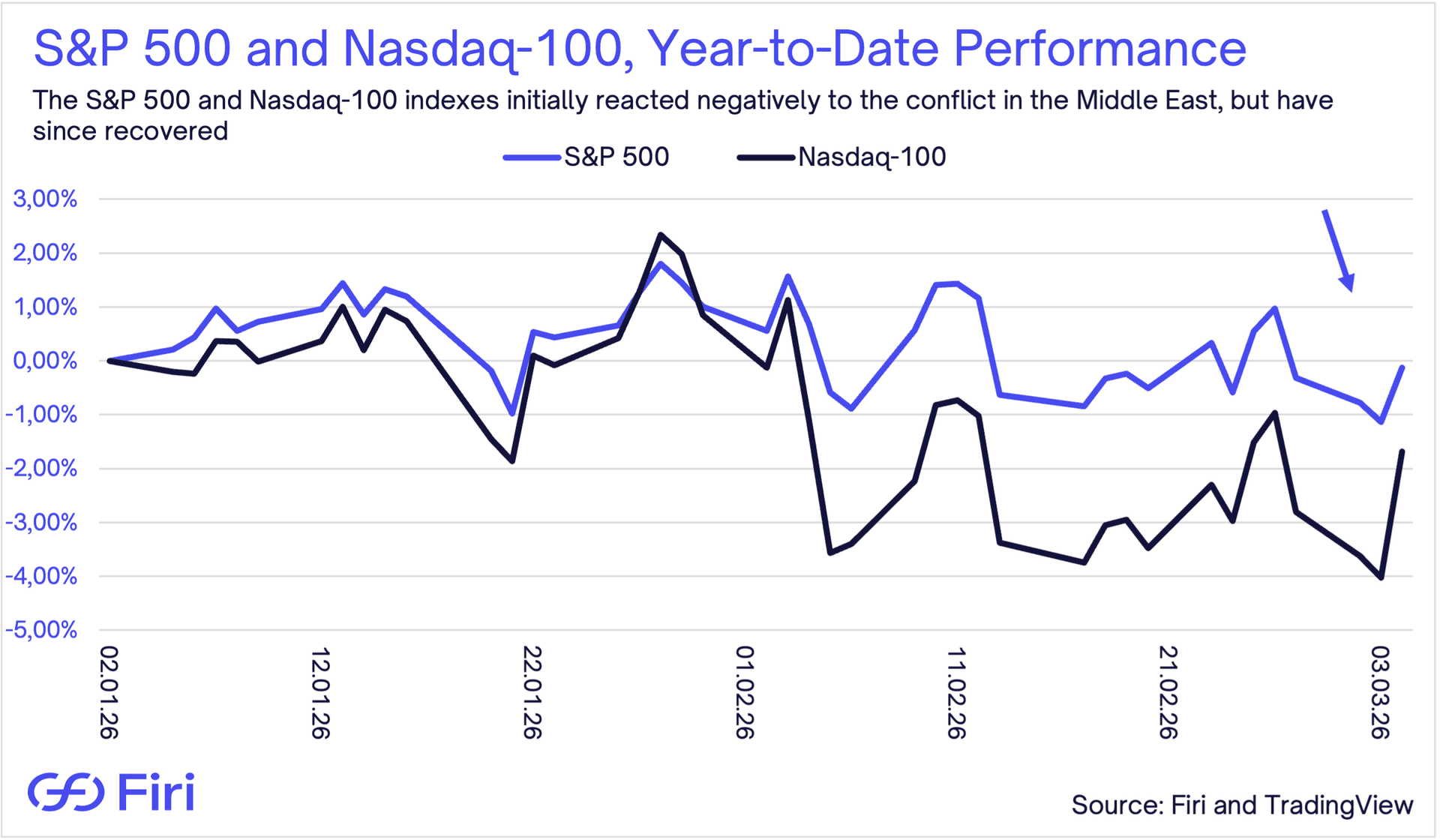
Chart 1: S&P 500 and Nasdaq-100, Year-to-Date Performance
Firi illustration

Because the initial strikes occurred over the weekend, the crypto market was the only one to react, since all other markets were closed. Prices fell initially, with Bitcoin dropping to around $63,000 and Ethereum to about $1,835 during the weekend. Both have since recovered and are now trading above their pre-conflict levels.

The relatively muted reaction may reflect the fact that crypto markets had already declined significantly earlier this year, meaning many weaker holders had already exited their positions.

The two main U.S. equity benchmarks, the S&P 500 and the technology-heavy Nasdaq-100, also declined slightly when markets opened on Monday but have since recovered the losses.

Even though market reactions have been relatively modest so far, the conflict in the Middle East introduces significant uncertainty. Key unknowns include how long the conflict will last, how it will end, and how it may affect the global economy and inflation—particularly through higher energy prices. For instance, crude oil has risen slightly more than 10 percent since the conflict began. This is largely because Iran is a major oil exporter and has threatened to close the Strait of Hormuz, a key shipping route through which large volumes of oil from other Middle Eastern countries pass.

The conflict has also strengthened the U.S. dollar against other currencies. At the same time, markets now expect fewer interest rate cuts from the U.S. Federal Reserve in the near term. Both developments are generally negative for risk assets such as cryptocurrencies.

Chart 2: Weekly U.S. Bitcoin and Ethereum ETFs Net Flow
Firi illustration

Before this weekend’s events, traditional investors appeared to buy the dip last week. The U.S. Bitcoin ETFs recorded $787.4 million in net inflows, meaning buying exceeded selling over the period. This was the strongest weekly inflow since the third week of 2026, when the funds saw $1.42 billion in net inflows.

These ETFs are often used by more traditional investors who prefer gaining crypto exposure through regulated financial products rather than purchasing cryptocurrencies directly on exchanges.

The U.S. Ethereum ETFs also recorded $80.5 million in net inflows last week. This was their strongest week since the third week of 2026, when they saw $479.3 million in net inflows.


A Number to Remember

19

This is the current reading of the crypto market’s Fear and Greed Index, which ranges from 0 to 100. Lower values indicate extreme fear, while higher values indicate extreme greed. A reading of 19 suggests significant fear in the market following this week’s attack on Iran by the U.S. and Israel, combined with already weak sentiment leading up to the event. That being said, the index was even lower in early February, when it reached 5.

On Our Radar

On our radar in the near future:

  • What Happens Next in Iran? The most important near-term factor for crypto markets is how the conflict in the Middle East develops. A ceasefire in the near future would likely be a positive outcome for markets.
  • Will ETF Inflows Continue? Traditional investors have been buying U.S. Bitcoin and Ethereum ETFs over the past week, resulting in net inflows. If this trend continues, it would signal that investors are not overly concerned about the Middle East conflict and may view the recent uncertainty as a buying opportunity.
  • What Will the U.S. Central Bank Decide? On March 18, the U.S. Federal Reserve will decide whether to keep interest rates unchanged or adjust them. Currently, markets assign a 97.3 percent probability that the Fed will keep rates steady. As the meeting approaches, expectations could shift—particularly if the Middle East conflict de-escalates—which, in turn, could affect markets.
Portrait of Mads Eberhardt, Cryptocurrency Analyst at Firi.

Mads Eberhardt

Written 05/03/2026

Should not be considered financial advice. Crypto may involve high risk.