
Firi Weekly: Is Another Energy Crisis Coming?

Firi Weekly: Is Another Energy Crisis Coming?

  • Oil Prices Spike Amid Middle East Conflict:
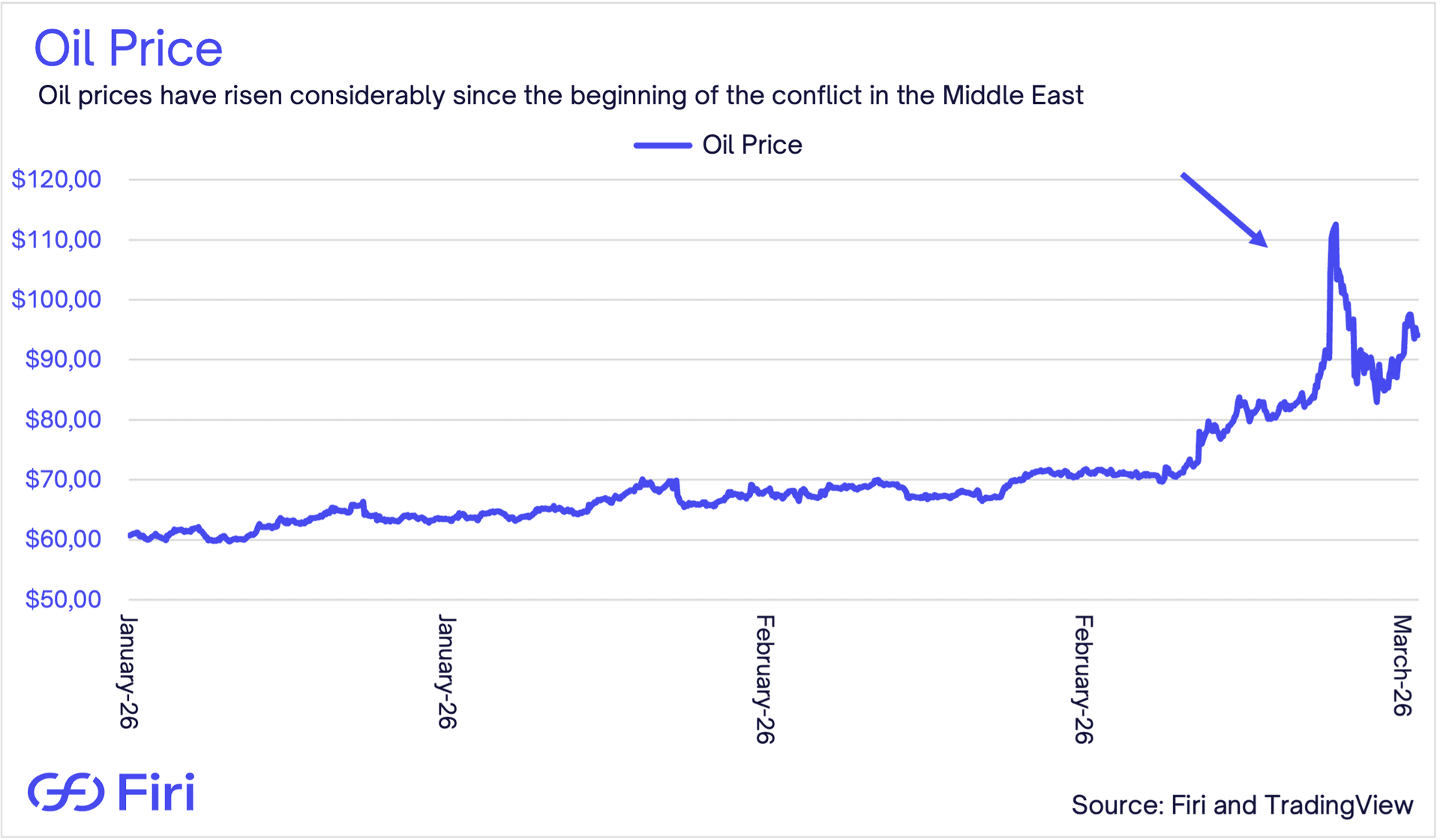
    • Brent crude oil briefly reached $113.5, up from about $73 before the Middle East conflict, after Iran threatened and largely closed the Strait of Hormuz, raising economic risks through higher global inflation and thus greater pressure on risk assets.
  • Stablecoin Supply Hits New Record:
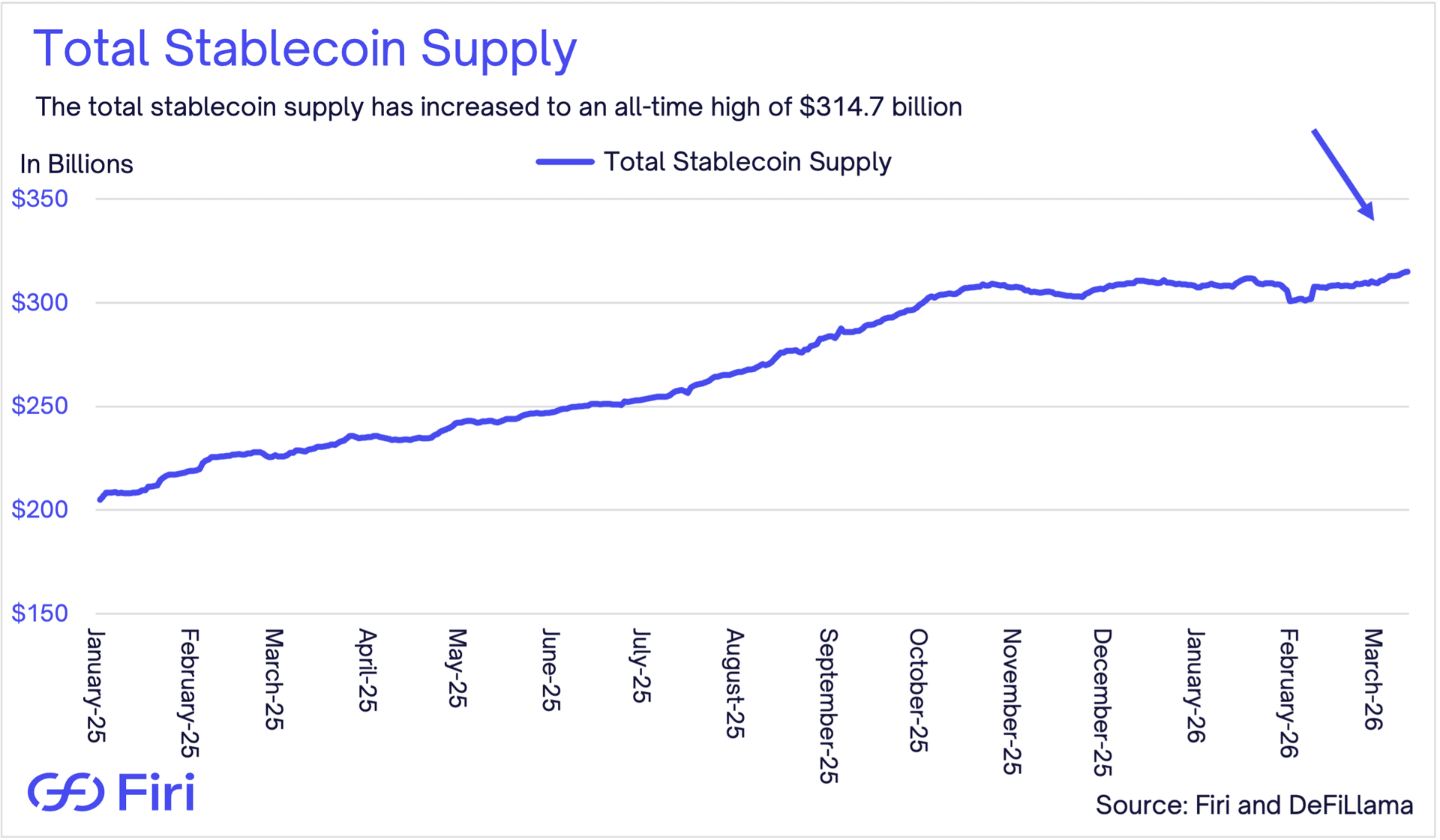
    • The total stablecoin supply surpassed $314.7 billion for the first time, suggesting growing real-world uses such as cross-border payments, increasingly independent from crypto market speculation.
  • Corporate Crypto Buying Drops Sharply:
    • Digital Assets Treasury firms bought only $555.7 million in crypto in February, down from $3.72 billion in January, signaling weaker demand from a key source of buying pressure in recent years and thus less market support.
  • U.S. Job Losses Surprise Markets:
    • The U.S. economy lost 92,000 jobs in February versus expectations of a 59,000 gain, while unemployment rose to 4.4%, reinforcing concerns about economic weakness affecting risk assets like crypto.
Last Week’s Big Three

The U.S. Senate to Vote on Trump’s Fed Chair Pick: Last Wednesday, U.S. President Donald Trump formally submitted the nomination of Kevin Warsh to the Senate to become the next Chair of the Federal Reserve (Fed), as current Chair Jerome Powell’s term ends in May. Trump had first announced Warsh as his preferred candidate on social media in late January. This means that the Senate must now vote on whether Warsh can indeed assume the position of Chair of the Fed.

That being said, it is not guaranteed that the Senate will do so, at least not without some drama. Several senators have expressed reservations about Warsh for different reasons, even though he has generally been viewed as a more credible and capable candidate than initially feared. Even if the Senate votes to confirm him to lead the Fed, it is still unclear whether that could realistically happen before Powell’s term ends. This uncertainty could influence markets.

U.S. Jobs Report Disappoints: The February U.S. jobs report was released on Friday and came in significantly weaker than expected. The economy lost 92,000 jobs during the month, compared with the market’s forecast of a 59,000 increase and January’s gain of 126,000 jobs. At the same time, the unemployment rate rose to 4.4%.

The report was negative for markets, particularly for risk-sensitive assets such as cryptocurrencies. This is because the crypto market often tracks broader economic conditions, and the data reinforced the view that the U.S. economy is losing momentum.

Crypto Buying by Firms Slows: Data from DeFiLlama shows that purchases by Digital Assets Treasury (DAT) firms slowed to their lowest level since October 2024. These companies, often publicly listed, typically focus on accumulating a single cryptocurrency. They finance these purchases by issuing new shares or taking on debt.

In February, DAT firms bought $555.68 million worth of crypto assets, down from $3.72 billion in January. The last comparable level of activity was in October last year, when purchases totaled $774.32 million. February’s figure was the lowest since October 2024. So far in March, the DATs show purchases rebounding to $780.4 million.

The recent slowdown suggests the market is cooling after the strong momentum these DATs showed through much of last year. With less buying from DAT firms, the crypto market has lost an important source of support, which helps explain why prices have struggled so far this year.

Behind the Charts

Chart 1: Oil Price

Firi illustration

We discussed the conflict between Israel and the United States on one side and Iran on the other in last week’s Firi Weekly. Since then, there have been few major developments in the Middle East, and the conflict remains ongoing. In recent days, U.S. President Donald Trump has suggested that the conflict could end soon, though it remains unclear whether that will happen.

What has moved markets most recently is the sharp increase in oil prices. During early trading on Monday, Brent crude reached around $113.5, the highest level since Russia’s invasion of Ukraine in 2022. Prices have since pulled back to roughly $96. Brent crude is a global benchmark used to price about two-thirds of the world’s traded oil supply.

The increase reflects Iran’s position as a major oil exporter and its threat, and partial success, in restricting traffic through the Strait of Hormuz. This shipping route carries a significant share of oil exports from the Middle East. Higher oil and gas prices can push global inflation higher over time because energy is not only used in transportation but also in the production of many goods. That dynamic is generally negative for economic growth and therefore for risk assets such as crypto. Crypto, however, has traded largely sideways over the past week.

Chart 2: Total Stablecoin Supply

Firi illustration

In recent months, the total stablecoin supply has edged slightly lower as the broader crypto market has also declined. However, the total stablecoin supply has now once again reached a new all-time high, surpassing $314.7 billion for the first time.

This development is notable because stablecoin supply has historically shown a strong positive correlation with crypto prices. In other words, when crypto prices rose, stablecoin supply tended to rise as well, and vice versa. This time, the relationship appears weaker.

One plausible explanation is that stablecoins are increasingly being used outside of crypto markets. Cross-border payments are one example of a growing use case. If that trend continues, demand for stablecoins may become less dependent on speculative activity in crypto markets. That would indicate that the crypto ecosystem is gradually developing more practical applications beyond trading.

A Number to Remember

$568.45 million

For the second consecutive week, U.S. Bitcoin exchange-traded funds (ETFs) recorded net inflows. Last week’s inflows totaled $568.45 million, following $787.4 million the previous week.

This marked the first time in five months that Bitcoin ETFs have seen net inflows for two straight weeks. Net inflows mean more of these instruments, and therefore more Bitcoin, were bought than sold, which is positive for the market.

On Our Radar

On our radar for the week ahead:

  • What Happens Next in Iran? The conflict in the Middle East remains the most important near-term factor for crypto markets. A ceasefire would likely be viewed positively by investors. More broadly, any development that restores normal oil flows would also support market sentiment. Conversely, any development that undermines that outlook could negatively affect markets.
  • Will the U.S. Clarity Act Soon Pass? The crypto market continues to watch the proposed U.S. Clarity Act, legislation intended to create a comprehensive regulatory framework for the industry. For some time it has appeared close to passing, but progress has repeatedly stalled. With the Middle East conflict dominating the political agenda, it may not be an immediate priority, though any progress toward getting it over the finish line could still be positive for the crypto market.
  • Will ETF Inflows Continue? U.S. Bitcoin ETFs have recorded several solid weeks of inflows. We continue to monitor whether that trend holds. Sustained inflows would indicate that traditional investors, who often access Bitcoin through these exchange-traded funds, are continuing to build exposure even as geopolitical tensions persist.
Portrait of Mads Eberhardt, Cryptocurrency Analyst at Firi.

Mads Eberhardt

Written 12/03/2026

Should not be considered financial advice. Crypto may involve high risk.