
Firi Weekly: An End to the Shutdown

Firi Weekly: An End to the Shutdown

  • U.S. Government Shutdown Ends After 43 Days:
    • The longest U.S. shutdown officially ended after potentially reducing GDP growth by 1.5 percentage points and driving Bitcoin to a six-month low.
  • Record $2 Billion Outflow from Crypto ETFs:
    • Exchange-traded crypto products experienced $2 billion in outflows last week, the highest since February, indicating traditional investors are selling amid negative market sentiment.
  • JPMorgan Chase Launches Digital Dollar Token:
    • America’s largest bank launched JPM Coin on Ethereum’s Base network for institutional clients, marking another step in traditional finance’s adoption of crypto.
  • Czech National Bank Allocates $1 Million to Crypto:
    • The Czech National Bank invested $1 million in Bitcoin and stablecoins as a test portfolio to gain practical experience with digital asset holdings.
Last Week’s Big Three

End of the U.S. Government Shutdown: Last Thursday marked the official conclusion of the 43-day government shutdown—the longest in U.S. history—after President Donald Trump signed a spending bill into law. While the government can now resume normal operations after suspending all non-essential functions, getting the federal bureaucracy fully operational again could take weeks.

The Congressional Budget Office (CBO), Congress's nonpartisan budget scorekeeper, previously estimated that a six-week shutdown would knock 1.5 percentage points off real GDP growth in the current quarter. That is a substantial hit, making the government's restart unquestionably positive for the economy. But markets seem jittery about two things: whether the damage is already done, and the backlog of economic data that went unpublished during the shutdown. This uncertainty helped drive the crypto market lower last week, compounding what has been a string of difficult trading sessions. Bitcoin, for instance, fell to a six-month low.

Crypto ETPs Suffer Their Weakest Week Since February: Exchange-traded crypto products—including U.S. Bitcoin and Ethereum ETFs—saw $2 billion in weekly outflows last week, according to CoinShares data. That is the heaviest weekly redemption since February. The previous week saw $1.17 billion in outflows, making this a three-week losing streak for these products.

The takeaway is clear: more traditional investors have been dumping crypto recently as sentiment has turned decidedly negative.

JPMorgan Deploys JPM Coin on an Ethereum Rollup: JPMorgan Chase, the largest U.S. bank by assets, launched a digital deposit token for the U.S. dollar aimed at institutional clients. The token, called JPM Coin (JPMD), operates on Base, an Ethereum layer-2 scaling solution. While digital deposit tokens function similarly to stablecoins, there is a crucial difference: their backing represents a redeemable claim on deposits held at a bank, whereas stablecoins may not be backed by bank deposits but rather other assets. JPMorgan plans to expand JPM Coin to other blockchains and currencies going forward.

Banks offering digital asset trading is one thing. But when they start building products that leverage the unique advantages of public blockchains—that is arguably more significant. JPM Coin represents exactly this kind of evolution, and it signals that America's largest bank is actively exploring and promoting public blockchain infrastructure.

Behind the Charts

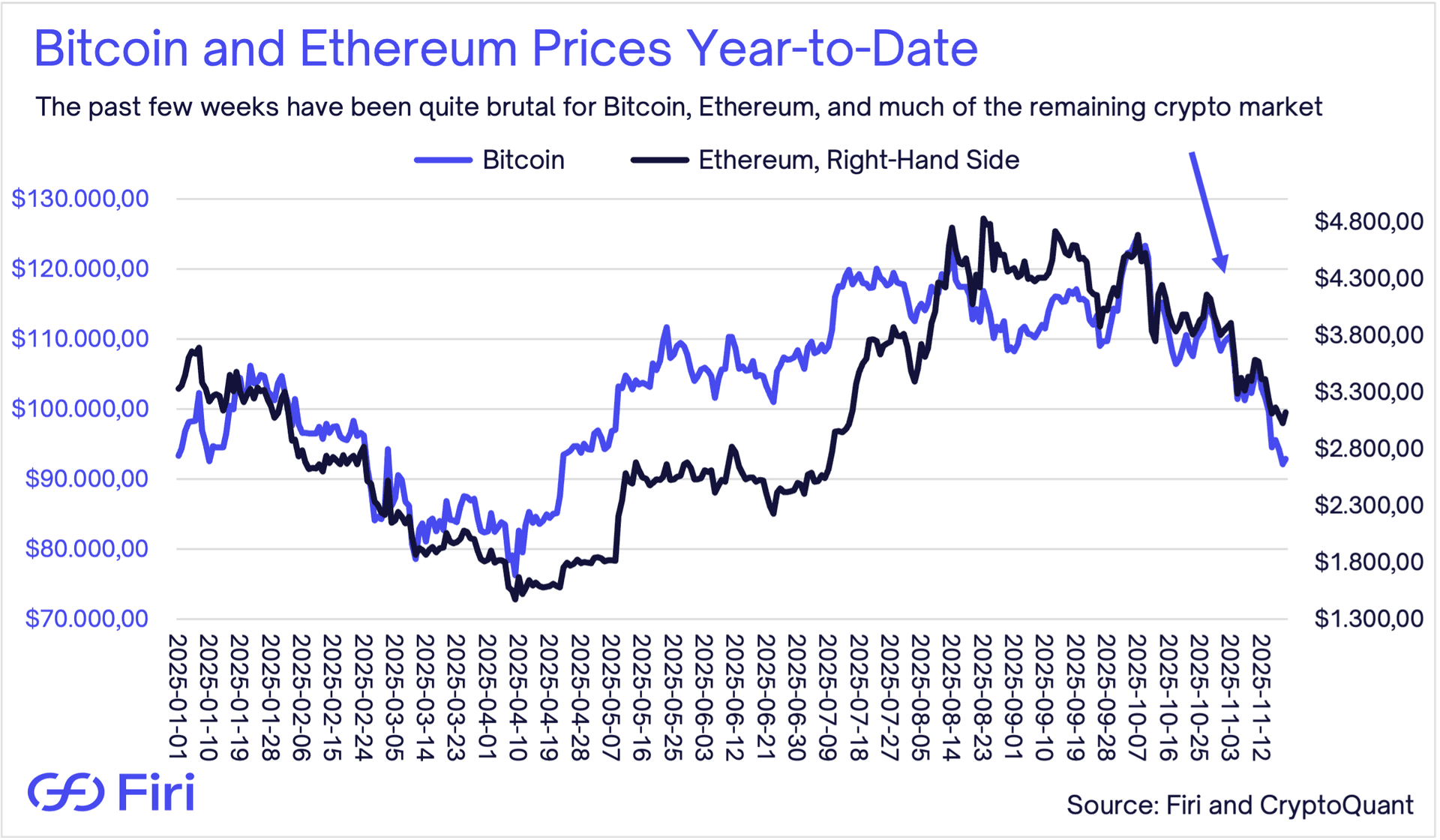
Chart 1: Bitcoin and Ethereum Prices Year-to-Date

Firi illustration

As said, the crypto market has endured several rough weeks. Bitcoin dropped as low as $93,000 last Sunday evening, then fell further to $89,200 on Tuesday this week. Ethereum came extremely close to breaking below $3,000 last week and actually touched $2,950 earlier this week.

Beyond the negative impact from the government shutdown and the ETF outflows, there appears to be a growing conviction among market participants that we are approaching another four-year cycle peak. Historically, crypto markets have topped roughly every four years. If this pattern holds, we should be near a cyclical high right now. Many traders appear to be positioning for this scenario, which has likely amplified selling pressure. There is also anxiety around treasury companies—particularly Strategy (formerly MicroStrategy)—potentially becoming forced sellers at some point. Last but not least, there is a broader concern about whether the recent rise in AI stocks can be sustained. Given the high correlation between tech stocks and crypto, it would not be positive for the crypto market if AI stocks come under strong selling pressure.

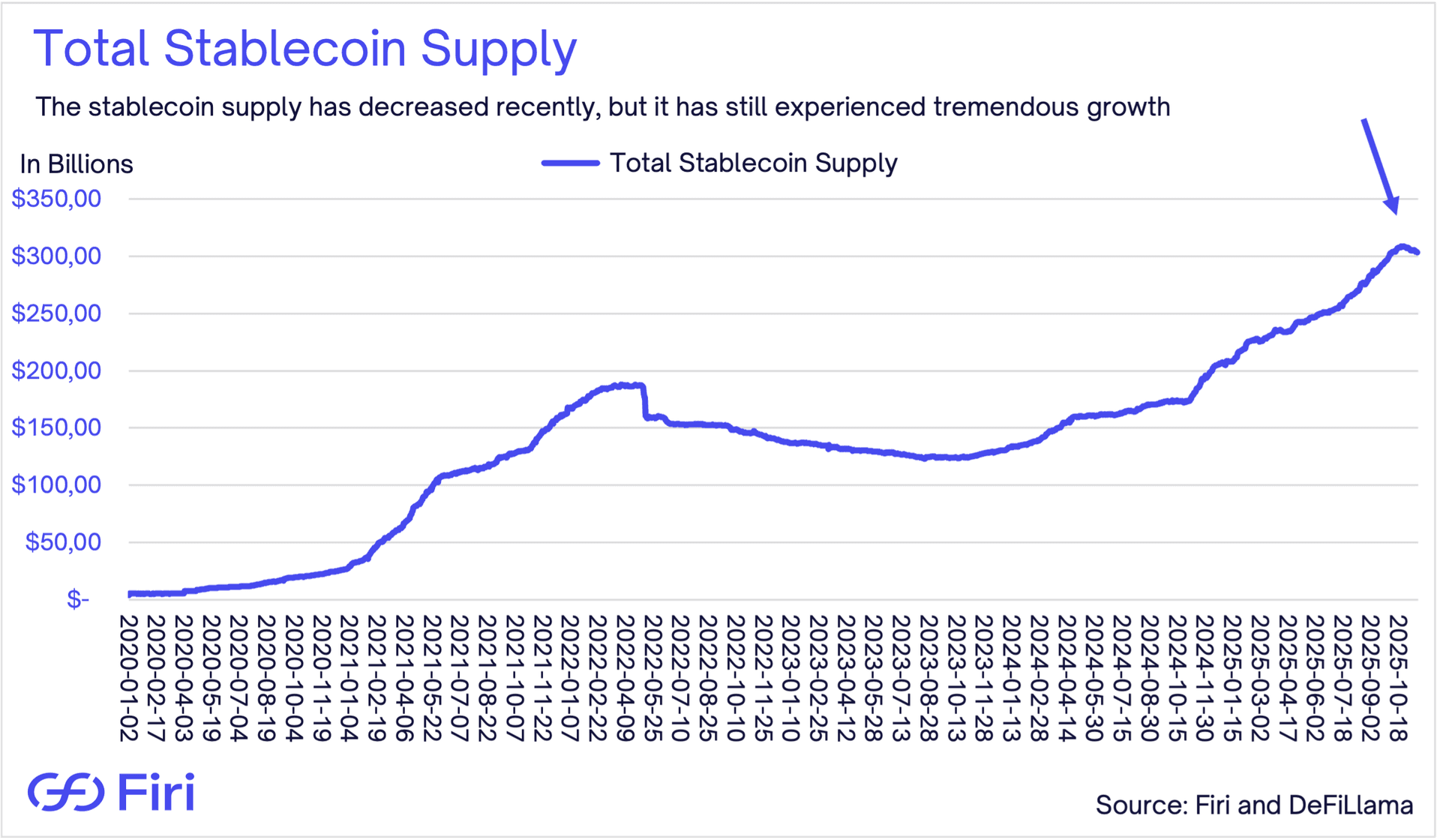
Chart 2: Total Stablecoin Supply

Firi illustration

The standout performer this year has been total stablecoin supply, which at one point surged more than 50% year-to-date, reaching a peak of $309 billion. However, since topping out on October 25th, supply has declined modestly to its current level of about $303.5 billion.

This pullback in stablecoin supply tracks with the recent decline in crypto prices—the two have historically shown strong correlation. That said, this relationship is probably weaker than in previous years. Over the past year especially, stablecoins have found substantial utility beyond the crypto markets, meaning crypto market performance and trading volumes should matter materially less to stablecoin demand than they once did.

A Number to Remember

$1 million

That is how much the Czech National Bank announced it has allocated to a test portfolio of digital assets, including Bitcoin and U.S. dollar-denominated stablecoins. According to the bank, the portfolio's purpose is "to gain practical experience with holding digital assets and to implement and test the necessary related processes."

On Our Radar

What we are watching closely in the near term:

  • Will Outflows Persist? We are particularly focused on whether exchange-traded crypto products will continue bleeding assets. This provides important insight into how traditional investors are positioning themselves during this market drawdown.
  • How Are AI Stocks Performing? We have recently seen fear ripple through equity markets, particularly around AI stocks and questions about whether that sector's rally is sustainable. Given the strong correlation between these names and crypto, continued weakness could keep pressure on digital assets.
  • What to Expect From the U.S. Jobs Report: On Thursday, the delayed September jobs report will finally be released—it was pushed back due to the government shutdown. The numbers are expected to show continued softness in the labor market, but any surprises could move markets considerably.
Portrait of Mads Eberhardt, Cryptocurrency Analyst at Firi.

Mads Eberhardt

Written 19/11/2025

Should not be considered financial advice. Crypto may involve high risk.